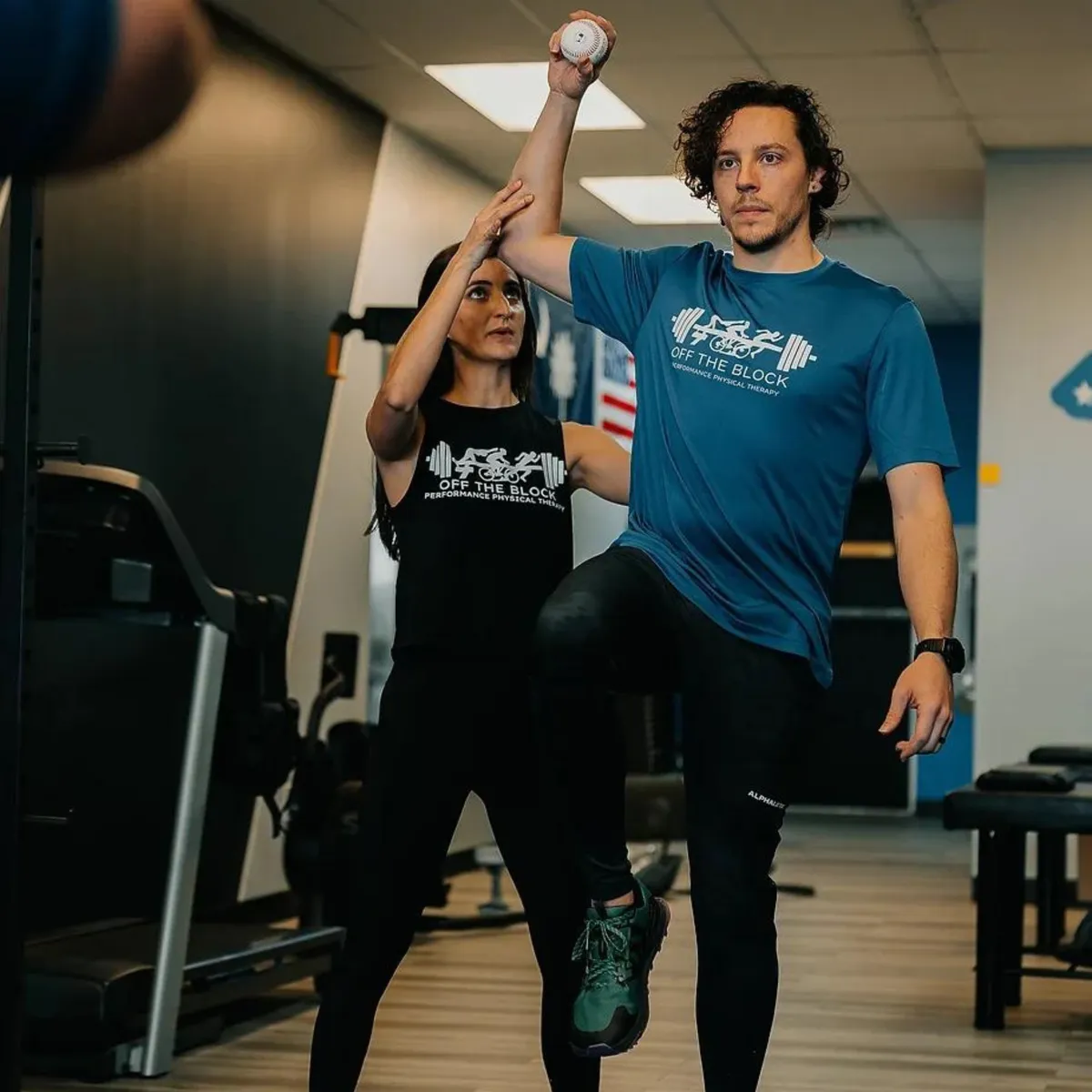
Offseason Arm Care for Pitchers: Essential Tips
Arm Care, Pitchers Offseason, Baseball Injury Prevention, Physical Therapy Central SC
Offseason Arm Care for Pitchers: What to Do Before Throwing Starts
Every spring, I see the same thing in the clinic. A pitcher feels great in January, ramps up fast for tryouts, and by March his elbow or shoulder is barking. When we dig into it, the problem almost never started in March. It started in the offseason.
The months between fall ball and preseason are the most important time of the year for a pitcher's arm. Here is how to use them well.
Why the offseason matters so much
Throwing a baseball is one of the fastest movements the human body makes. The shoulder and elbow take a huge amount of stress on every pitch, and that stress adds up over a season.
The offseason has two jobs. First, it gives those tissues time to actually recover. Second, it gives you a window to build the strength and mobility your arm needs to handle the next season. Skip either one, and you are starting spring with an arm that is already behind.
MLB and USA Baseball's Pitch Smart guidelines recommend at least four months off from competitive pitching each year, with two to three of those months completely free from overhead throwing. For a lot of the high school and travel ball players I work with around Clemson and Pendleton, that rest window is the first thing that gets skipped.
Phase 1: Real rest
Rest does not mean doing nothing. It means a break from throwing while the rest of your body keeps training.
This is a great time to lift, sprint, and work on your legs and core. Velocity starts from the ground up, so a stronger lower half is one of the best things a pitcher can build while the arm recovers.
Phase 2: Rebuild the arm
Once the arm has had time off, we start building it back up. The areas I focus on most with pitchers:
Rotator cuff strength, especially the muscles that slow the arm down after release
Scapular control, so the shoulder blade moves well and supports the shoulder
Forearm and grip strength, which helps protect the inside of the elbow
Hip and thoracic mobility, so the arm is not making up for stiffness somewhere else
This work does not need to take long. Three or four short sessions a week, done consistently, make a big difference by the time throwing starts.
Phase 3: A gradual return to throwing
The biggest mistake I see is going from zero to full throwing in a week or two. Your arm needs a progression: shorter distances and lower intensity first, then building distance, volume, and effort over several weeks before getting back on the mound.
A structured throwing program gives you that roadmap. It also keeps players from comparing themselves to the teammate who is already throwing bullpens in December.
Common offseason mistakes
Throwing year-round with no real break
Playing a second overhead sport straight through the offseason with no arm recovery
Skipping arm care because nothing hurts right now
Ramping up too fast right before tryouts or showcases
Ignoring small aches and hoping they go away
Warning signs to get checked out
Some soreness after throwing is normal. These are not:
Pain on the inside of the elbow
Pain that shows up during throwing, not just after
Numbness or tingling in the ring and pinky fingers
A drop in velocity or control with no clear reason
Pain that lingers more than a day or two after throwing
Shoulder pain that wakes you up at night
If any of these sound familiar, do not wait until spring. Catching an issue in November gives you months to fix it. Catching it in March can cost you a season.
Build a durable arm this offseason
At Off The Block Performance Physical Therapy in Central, I work with pitchers from Clemson, Pendleton, Easley, Seneca, and Anderson to build arms that hold up all season. We assess how your whole body moves, find what is putting extra stress on your arm, and build a plan that gets you ready for spring.
Book Your Evaluation today, or call or text us at 864-633-9272.
